unstilling life
ongoing



“Unstilling life” is inspired by the presence of rose-ringed parakeets in Dutch cities to explore the entangled histories of colonialism, species classification, and ecological politics. Why are parakeets still labeled “invasive” in the Netherlands, when their presence here is a direct result of colonial extraction and the European desire for the exotic?
The project unfolds from the premise that these birds are not pests, but living remnants of a long colonial history. I examine their political status through the lens of historical justice and what Eva Meijer calls “political animal voices” (2019). My aim is not to speak for the parakeets, but to create conditions for interspecies exchange, to explore how we might co-author meaning, memory, and resistance.
To ground this, I am looking back to 17th-century Dutch genre painting. These works were instruments of soft imperial propaganda and catalogues for the exotic: depicting parrots, exotic fruits, spices, and imported luxuries as status symbols. I am researching archival paintings and catalogues across the Netherlands to build a timeline that reframes these birds not as “escaped pets,” but as colonial subjects whose current “invasive” status is both biologically reductive, politically loaded, and historically short-sighted.
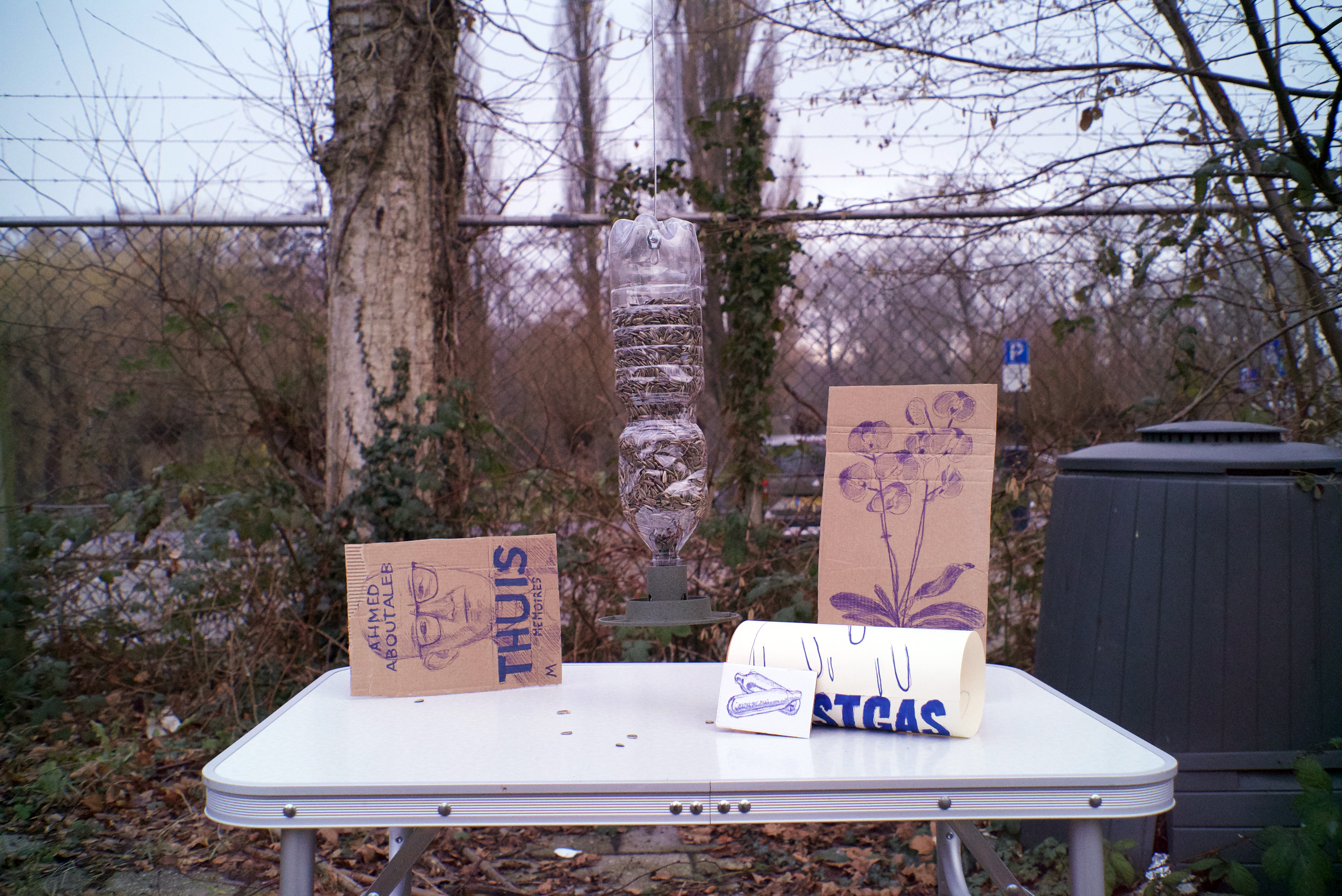
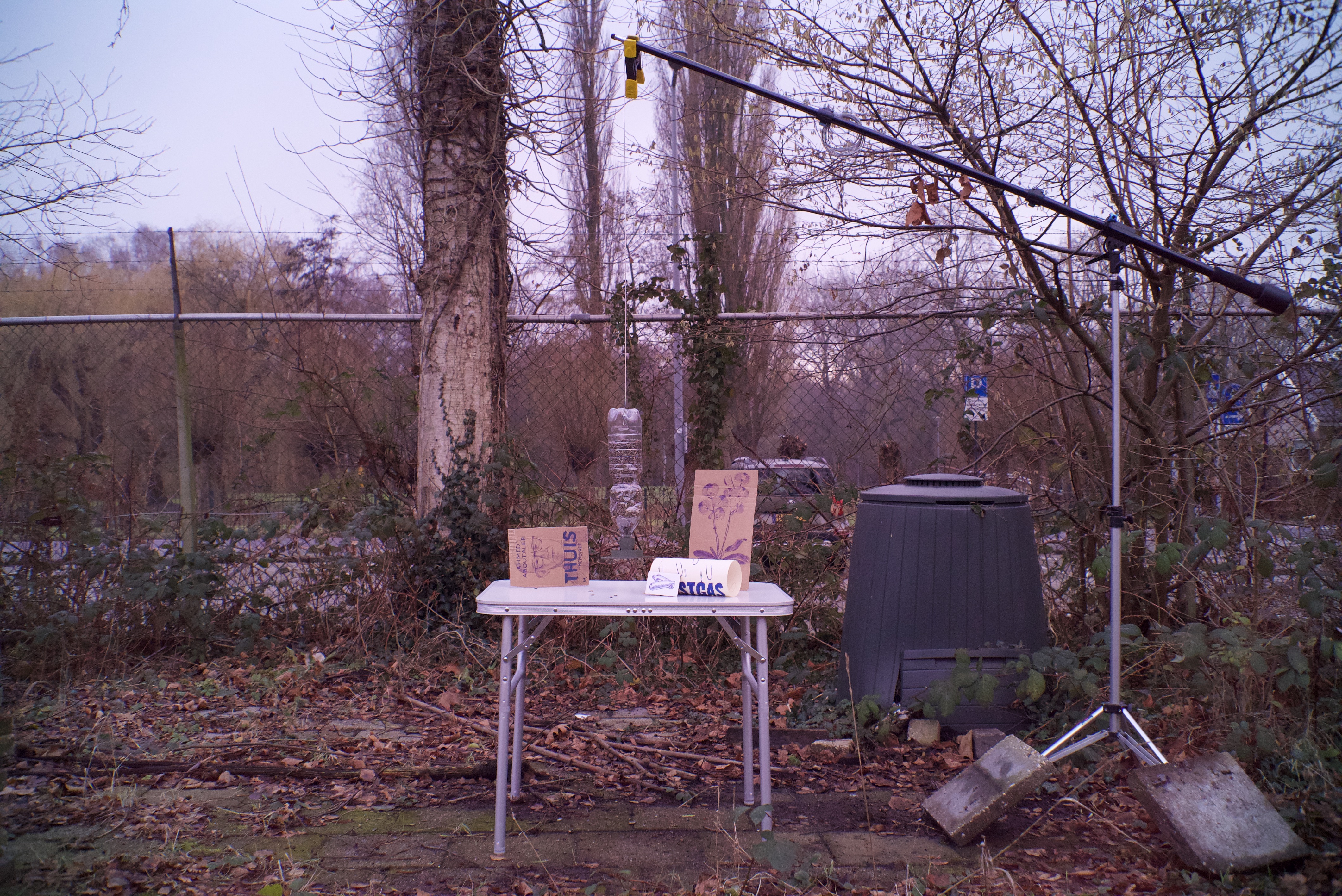
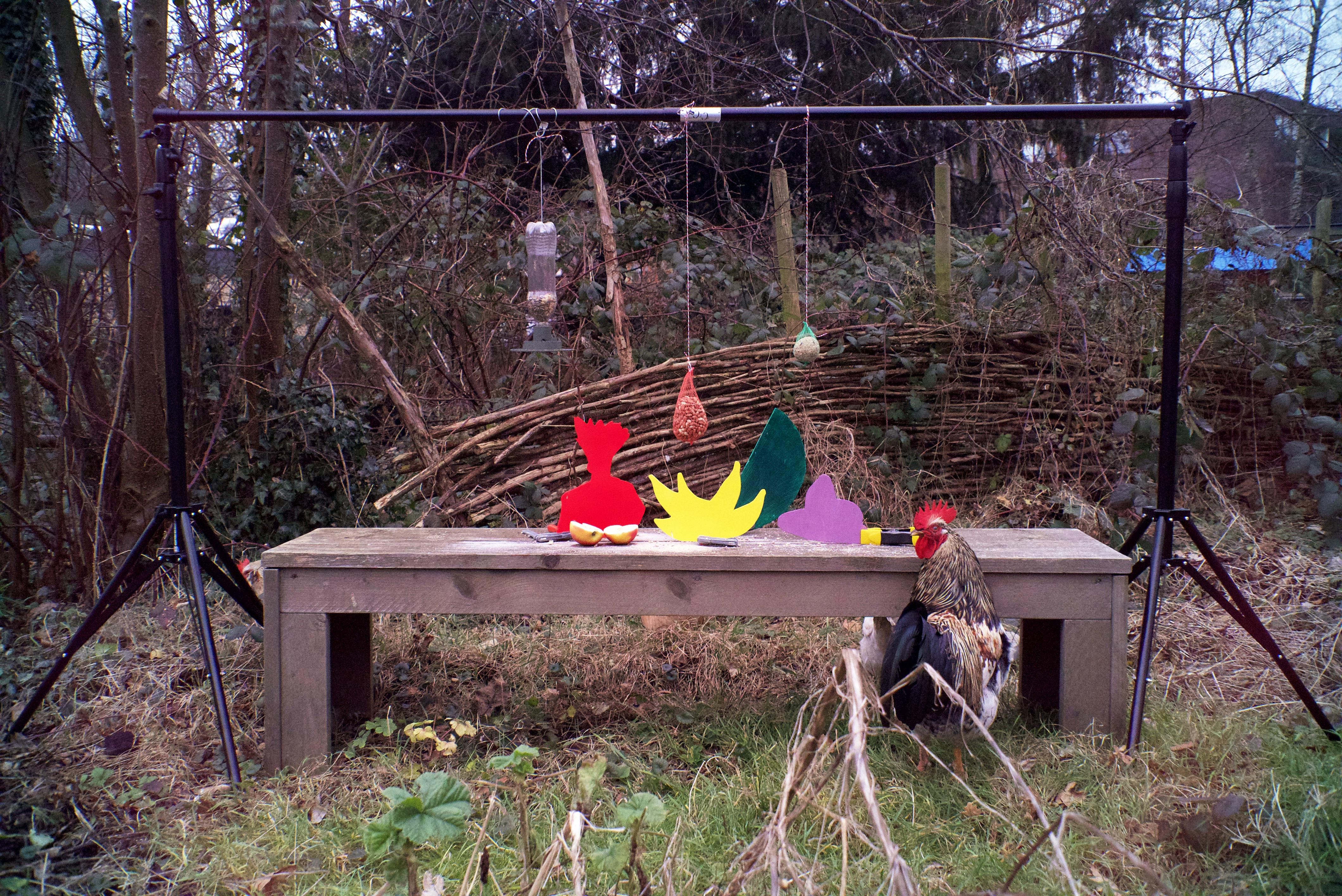
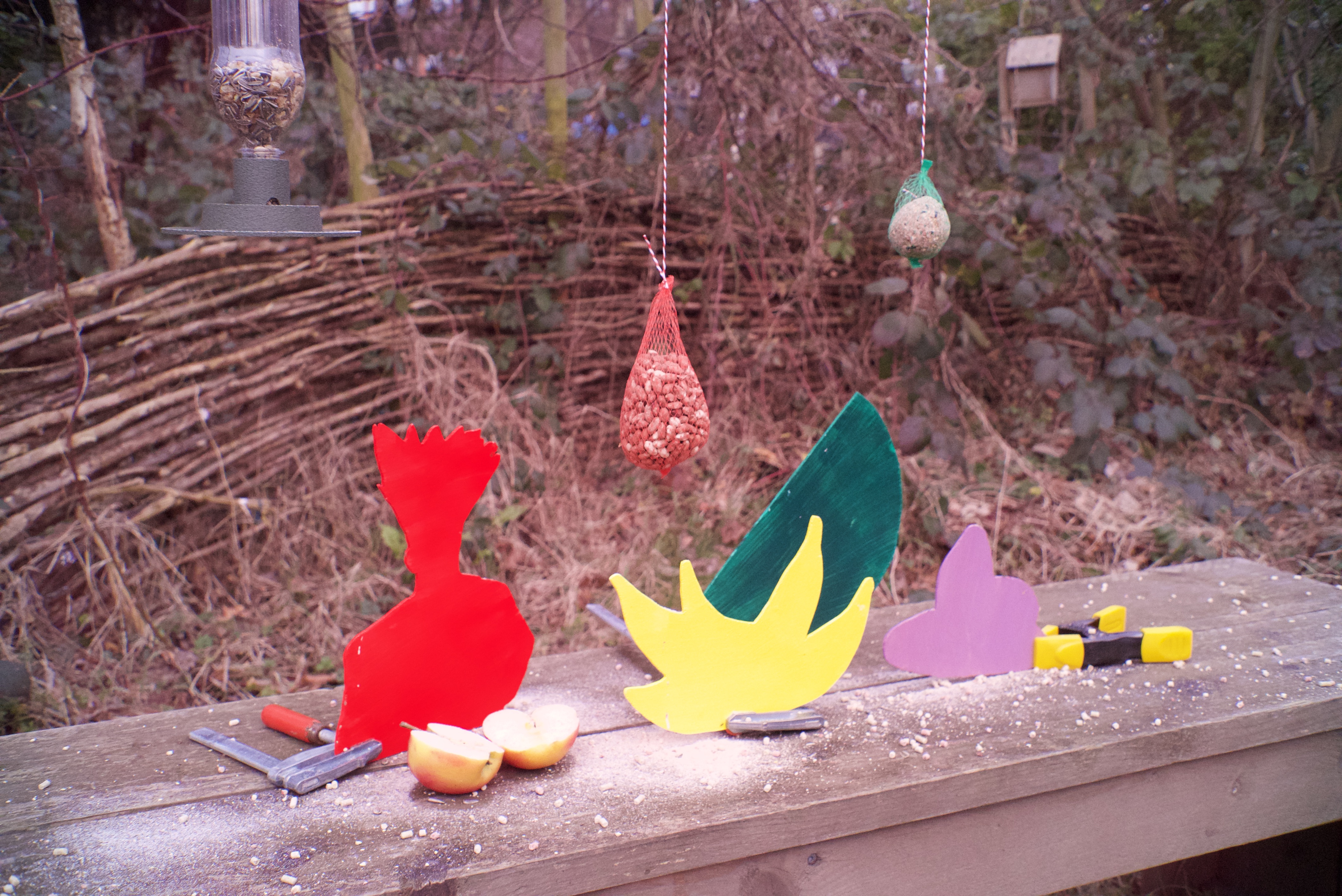
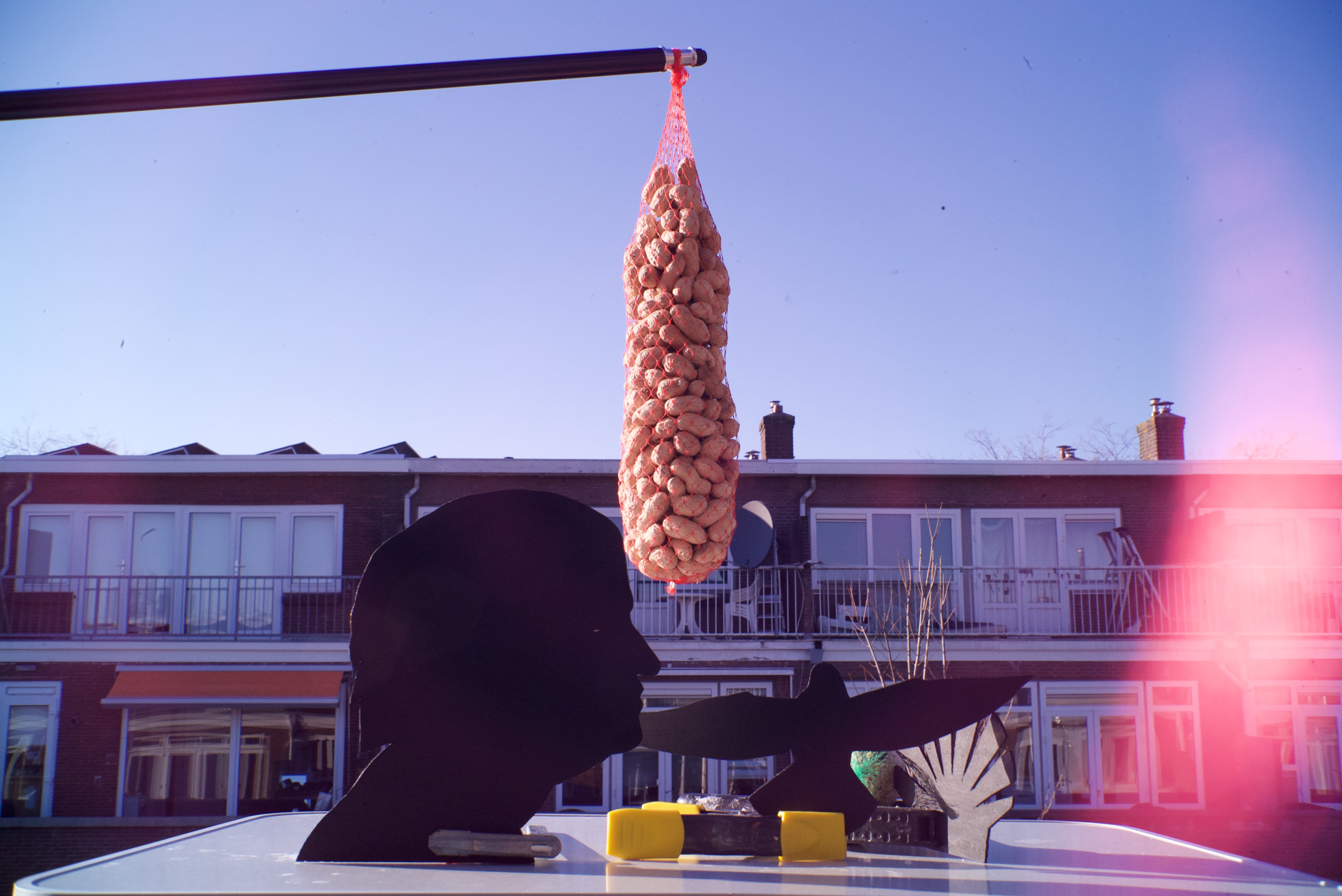
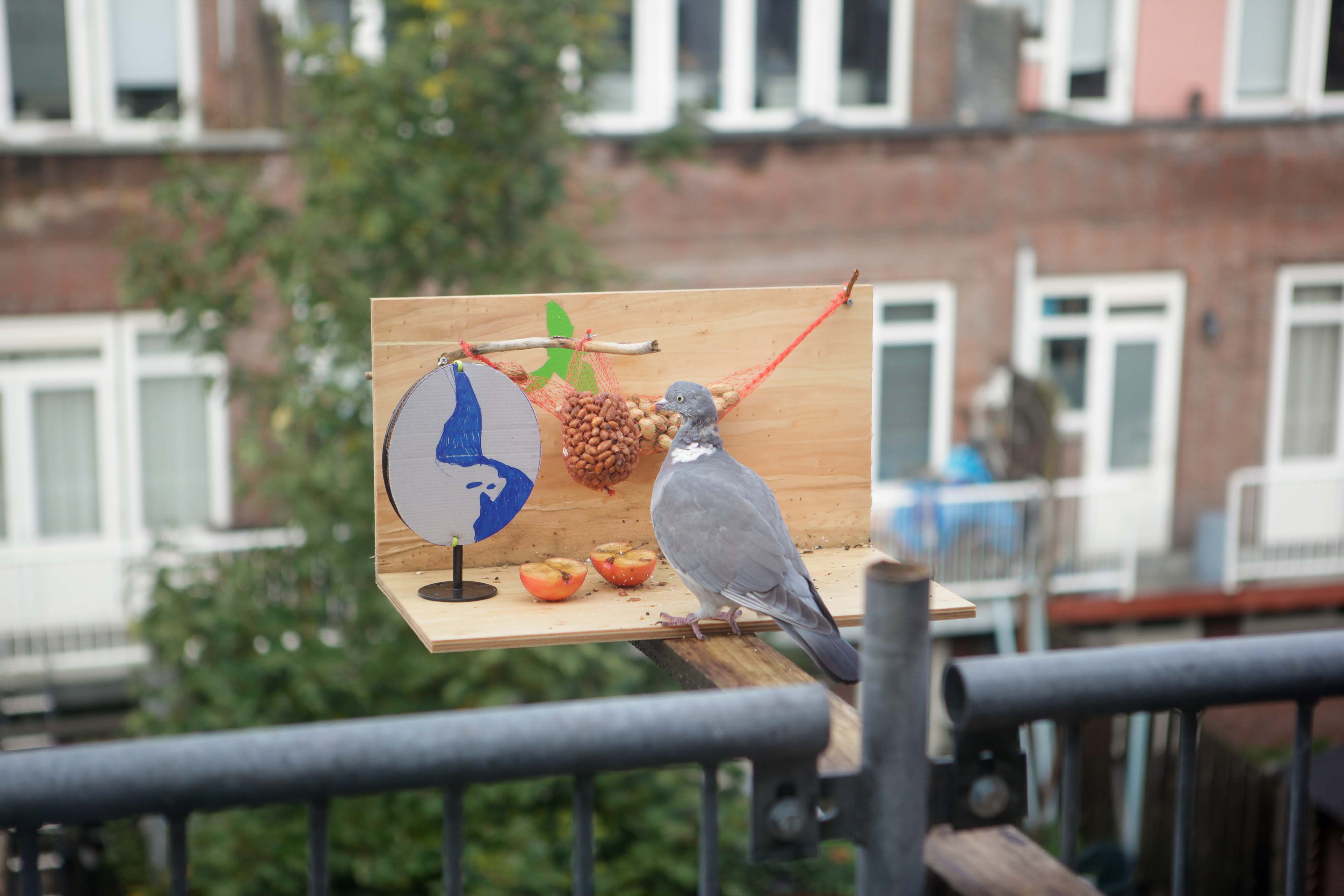
I am making a series of open-air still-life installations outside my studio and garden, constructed feeding grounds designed for interaction with a local community of parakeets and other birds I’ve developed a sustained relationship with. These installations incorporate symbolic elements drawn from colonial trade, ecology, and contemporary global life. Objects change over time in response to the parakeets’ behavior, following a process shaped by deliberation, not control.
Feeding, in this context, is reimagined as a “language game”, a concept from Wittgenstein, expanded by Meijer to describe interspecies communication rooted in practice rather than grammar. By framing this daily exchange as dialogue, I challenge the assumption that animals are politically or linguistically mute. The birds’ choices of what they eat, when they arrive, how they disturb or ignore the still-life arrangements become acts of agency beyond instinct.
The process is being documented audiovisually, capturing the birds’ interruptions as formal disruptions. In contrast to historical paintings where parrots are caged, silenced, and ornamental, these scenes are alive. The work questions dominant systems of classification of “native,” “invasive,” “domestic,” “feral” and argues for a more nuanced ecological ethics based on shared futures.
At a time when politics in the Netherlands and elsewhere increasingly frame both human and nonhuman border-crossers as threats, this project proposes an alternative politics of attention, cohabitation, and reimagination. It is not a symbolic gesture but a lived, situated practice of listening and responding, one that insists parakeets are already speaking.
With the kind support of Amarte Fonds